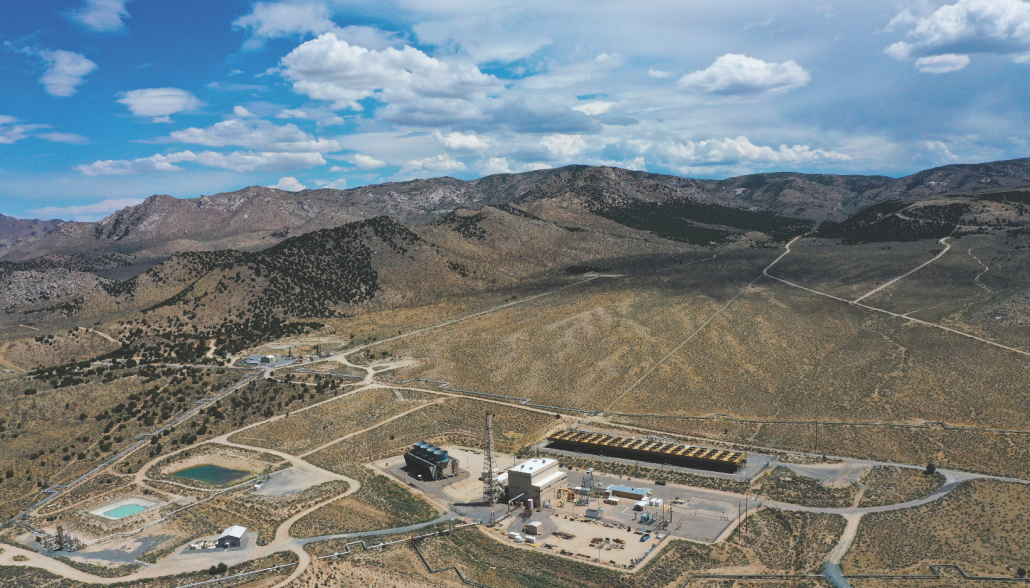
A drill rig near the corner of Kearns Boulevard and Bonanza Drive began boring 500 feet into the earth in late July, testing whether Park City could build a thermal energy network to heat and cool buildings across the Bonanza Park area.
City Lands and Sustainability Director Luke Cartin said the borehole at the Five Acre site will take about five days to complete. He and his team plan to present findings to the Park City Council by fall.
"You can view it as almost like we're sticking a temperature probe down 500 feet just to see what's going on down there," Cartin told KPCW. "We're also seeing what does all that subsurface geology actually look like."
The test is a precursor to a feasibility study for a thermal energy network. The technology works by circulating water through pipes 10 to 20 feet underground, where temperatures hold steady around 50 degrees year-round. The water absorbs or releases heat before cycling back into buildings.
Jennifer Eden, a senior climate and clean energy associate at Utah Clean Energy, said such systems are two to three times more efficient than conventional air-based heating and cooling. Geothermal equipment lasts more than four times as long as a standard air conditioning unit, she added, though the systems work best for new developments or major remodels because they require drilling.
Park City already runs geothermal heating and cooling at four municipal buildings: City Hall, the police station, the post office and the 3Kings Water Treatment Plant. Cartin said scaling a network across multiple buildings could boost efficiency further.
Regional momentum
The test puts Park City alongside several Intermountain West institutions investing in geothermal. Colorado Mesa University operates the region's largest system, which has saved nearly $12 million since 2008 and cut the school's carbon footprint by almost 18,000 metric tons per year. A recent expansion brought the network to 79% of campus buildings, covering more than 1.8 million square feet.
Weber State University installed a thermal system in its Lindquist Hall that reduced energy use per square foot by more than 80%. Aspen School District completed a 1,000-foot bore test in July, and The Point development in Draper conducted its own feasibility study for a 600-acre thermal grid.
The Five Acre connection
The drilling site is the same city-owned parcel where a contested mixed-use development proposal is before the Park City Planning Commission. According to Park City Municipal, that project, developed with partner Brinshore, calls for 106 housing units, commercial space, a childcare center and underground parking. The geothermal test could inform how the site is eventually built out.
The fall presentation has no confirmed date. Residents can track the Park City Council agenda for updates.