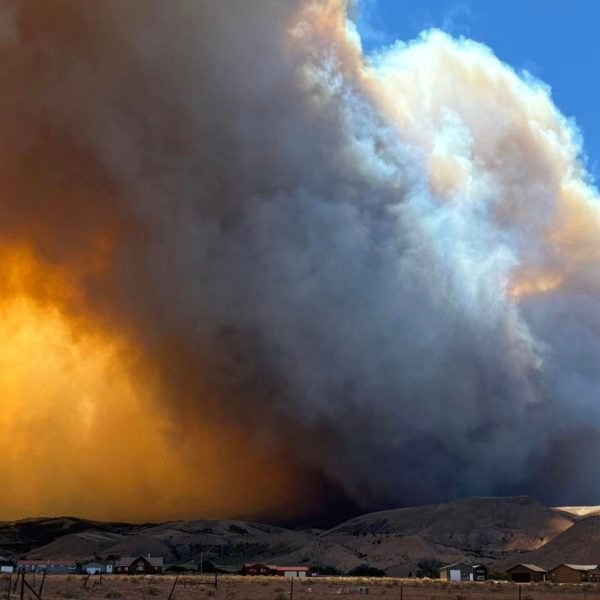
Wildfire smoke drifting in from Oregon and Washington is blanketing Park City and the Snyderville Basin through at least Friday, Aug. 7, and a dangerous heat spike forecast for the weekend means residents with heart or lung conditions face a compounded health risk through Sunday, Aug. 9.
The National Weather Service in Salt Lake City said in its Aug. 5 forecast discussion that smoke from numerous Pacific Northwest fires will continue moving into Utah and southwest Wyoming through at least Friday. A dry west-to-northwest airflow, driven by high pressure strengthening along the Pacific Coast, is carrying the smoke into the region.
This is not the same smoke Basin residents saw last week. The haze that settled over Summit County on Wednesday, July 29, came from the Widemouth 2 Fire in Millard County, and smoke from the Millcreek Fire drifted toward Park City on Aug. 3 and Aug. 4. The current smoke originates from fires burning hundreds of miles away in the Pacific Northwest.
Heat compounds the danger
Afternoon highs could reach 10 degrees above seasonal averages on Saturday, Aug. 8, and Sunday, Aug. 9, according to the National Weather Service, creating the potential for widespread dangerous heat and an increase in heat-related illness.
The combination is particularly concerning because smoke reduces the body's ability to tolerate heat, and high temperatures drive people outdoors where smoke exposure is greater.
Who is at risk
The Utah Division of Air Quality forecast air quality in Salt Lake County at "unhealthy for sensitive groups" levels Wednesday, Aug. 5, through Friday, Aug. 7. The agency advised people with heart or respiratory conditions to reduce physical exertion and outdoor activity when smoke becomes thick.
Fine particulate matter (PM2.5) is the primary health threat from wildfire smoke. According to the U.S. EPA's AirNow program, the microscopic particles can enter the eyes and respiratory system, aggravate chronic heart and lung diseases and cause symptoms including burning eyes, runny nose and bronchitis.
The amount of smoke at ground level may vary depending on location, elevation and changing winds, the National Weather Service noted.
What residents should do
The EPA recommends following local air quality reports and reducing exposure when smoke becomes heavy. People with asthma or other lung diseases should follow their treatment plans and contact a medical provider if symptoms worsen.
Residents can monitor conditions through the UtahAir app or the federal AirNow Fire and Smoke Map at fire.airnow.gov.
When relief arrives
Monsoon moisture could spread farther north Sunday, Aug. 9, into Monday, Aug. 10, bringing lower temperatures and an increasing chance of showers and thunderstorms across central and northern Utah. That shift should provide relief from both the heat and the smoke.