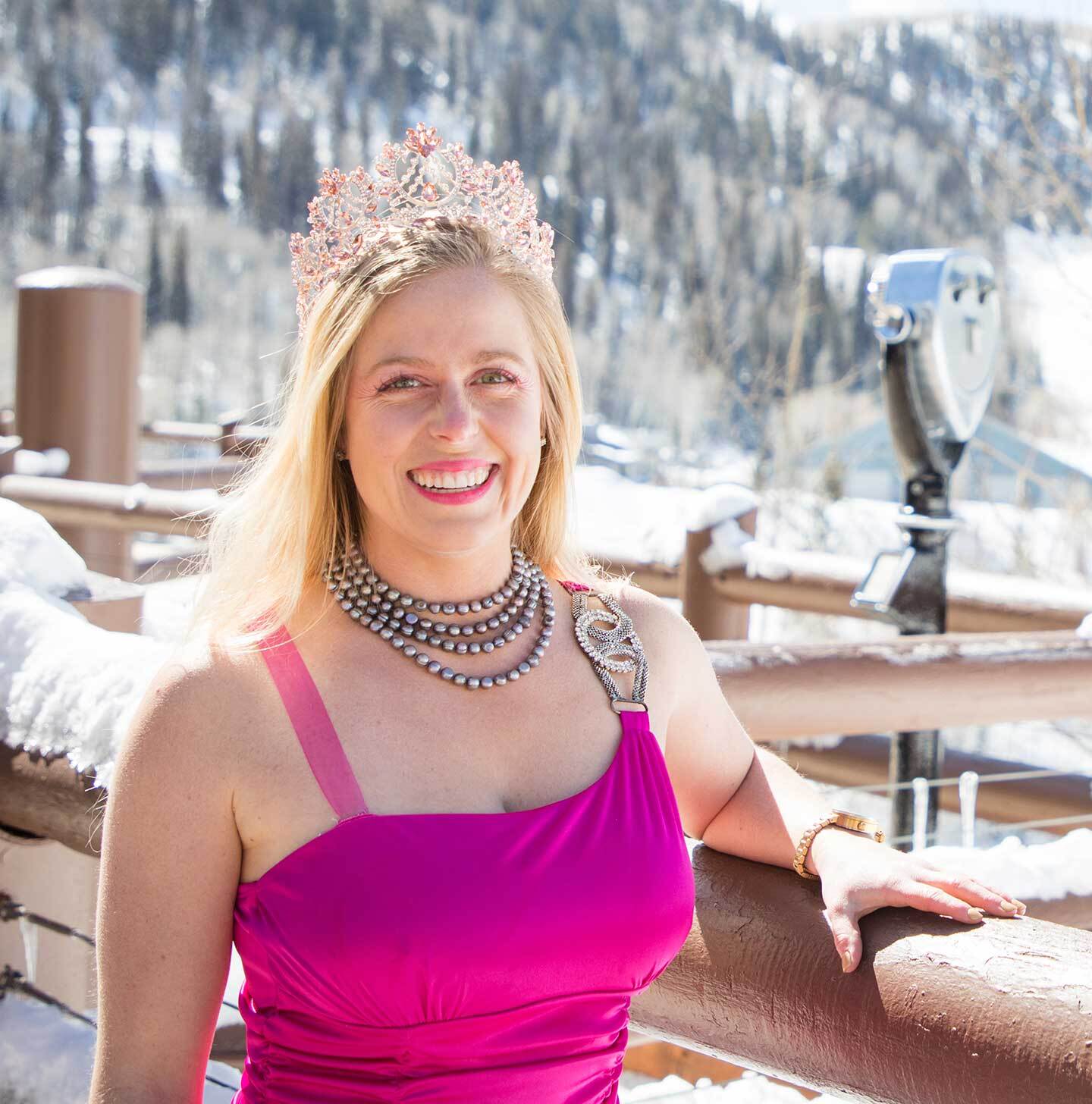
Jamie MoCrazy stood on top of Africa's tallest mountain on Tuesday, June 23, ten years after a crash on a ski jump left her relearning how to walk.
The Park City athlete and former X Games competitor completed the eight-day Lemosho route up Mount Kilimanjaro with her mother, Grace Mauzy, and Kody Williams, a Canadian snowboarder and fellow brain injury survivor, according to TownLift. Head guide Gabby Leintz of Kilisherpas led the team.
MoCrazy, 33, became what TownLift called the first woman to land a double flip in X Games slopestyle in 2013. Two years later, while attempting a double backflip at the World Tour Finals in Whistler, British Columbia, she crashed. Her brain bled in eight spots, her right brain stem was damaged, and the right side of her body was completely paralyzed. She spent two months in the hospital.
"I started convulsing and immediately went into a natural coma," MoCrazy told KSL in a May profile. "When I was airlifted to the hospital, my fatality report was written because my injury looked so dire."
The June 23 summit date fell in the 10th year since that 2015 accident. MoCrazy, whose given name is Jamie Crane-Mauzy, is the founder and CEO of the MoCrazy Strong Foundation, a Park City-based nonprofit that supports brain injury survivors and their families through education, community events, and advocacy. The foundation became a 501(c)(3) in September 2022.
MoCrazy and Williams first connected as patients of Dr. Mypinder Sekhon at Vancouver General Hospital. Williams still takes daily seizure medication but reached the summit alongside her.
Training in Park City
Two months before the climb, MoCrazy and her mother trained at The Smart Fit Method's Park City location three times a week with trainer Nina. Sessions combined altitude deprivation training on a stationary bike, gradually simulating elevations from 10,000 to 20,000 feet, with sauna and cold plunge recovery.
The preparation paid off. MoCrazy's blood oxygen levels held around 98% for most of the trip and never dropped below 93% on summit day. She never experienced altitude sickness.
Her mental approach drew on a technique her mother, who holds a master's degree in psychology, taught her during early recovery. When MoCrazy struggled to keep pace on short walks in Park City, Mauzy suggested she reframe rest stops: instead of "I need a break," say "Let's stop and look at the view."
Kilimanjaro guides reinforced a similar one-day-at-a-time strategy, discussing only the next day's plan each evening rather than the full route ahead.
What's next
MoCrazy said she is working with Kilisherpas to develop an "alternative peaks" retreat built around the mindset training that shaped her climb. No date has been announced. The MoCrazy Strong Foundation's Alive to Thrive events have previously included group skiing trips and indoor skydiving, with scuba diving under consideration.