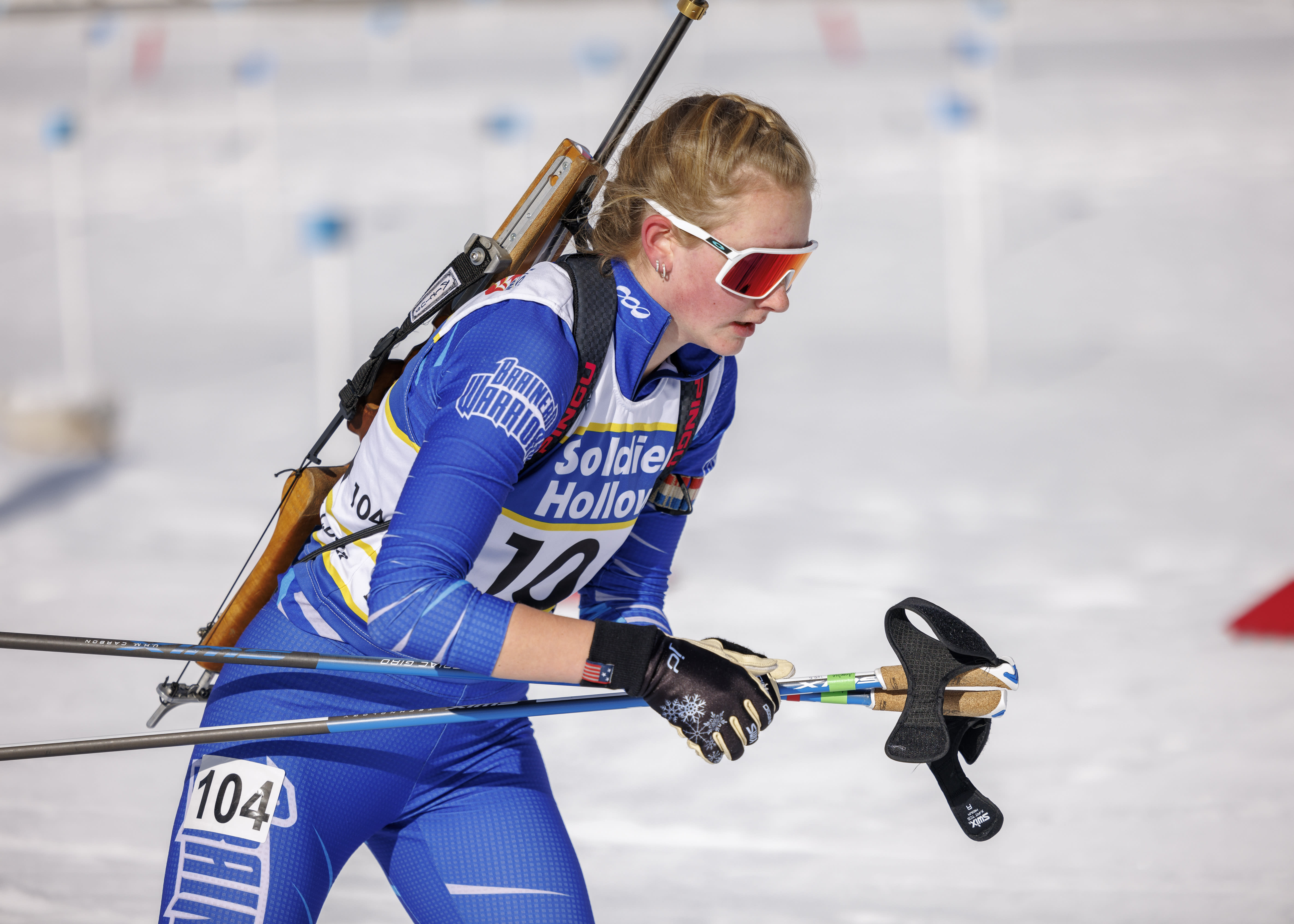
The board of U.S. Biathlon voted Wednesday, July 29, on whether to hand day-to-day operations to Park City-based U.S. Ski & Snowboard, a rare consolidation that would give the cash-strapped sport access to a $70 million organization but has athletes fearing biathlon gets swallowed whole.
The vote, scheduled for 4 p.m. Eastern, caps a fast-moving process that began in March after the U.S. once again failed to win a biathlon medal at the Milan-Cortina Winter Olympics. The outcome had not been confirmed as of Wednesday afternoon.
Under the proposed "Strategic Operating Alliance," U.S. Biathlon would remain a legally separate entity with its own board, financials, and International Biathlon Union membership. U.S. Ski & Snowboard, headquartered at the USANA Center of Excellence in Park City, would take over staffing, programs, events, and administration.
The financial math driving the deal: the U.S. Olympic and Paralympic Committee cut biathlon's funding by 22%, and sponsors are pulling back. U.S. Biathlon CEO Jack Gierhart told members the alliance would generate at least $3.3 million in new revenue and shared-services savings over four years, according to KPCW. The USOPC has indicated it would restore funding if the alliance proceeds.
"We feel that we can help take biathlon to the next level," USSS CEO Sophie Goldschmidt told the Associated Press. Goldschmidt relocated to Park City when she took the job in October 2021 and also sits on the Utah 2034 Olympic organizing committee board.
The gap between the two organizations is stark. USSS oversees 11 sports and 250 elite athletes, including Mikaela Shiffrin and Jessie Diggins, with a $70 million budget and 40,000 members. U.S. Biathlon operates on $4 million with 1,407 members. The sport, which combines cross-country skiing and rifle shooting, has never produced an American Olympic medalist despite enormous popularity in Europe.
Not everyone is buying the pitch.
Art Stegen, author of "Unique and Unknown: The Story of Biathlon in the United States," sports lawyer Ed Williams, and Olympian Joan Wilder filed an ethics complaint Saturday, July 25, against board chair Bob Hall, alleging he improperly hosted merger meetings without notifying members. They also alleged board member Dexter Paine has a conflict of interest because he sits on both the U.S. Biathlon and USSS boards.
The U.S. Biathlon ethics committee acknowledged Monday, July 27, that "it appears there is merit to some of the allegations" but dismissed the complaints, saying it lacks authority to remove a board member.
Longtime biathletes Jon Schafer of Colorado and Marc Sheppard of Montana produced an analysis concluding the USSS partnership should be a "last resort." Athletes point to USSS cutting funding to U.S. Ski Jumping in 2010 and Nordic Combined in 2014 as cautionary tales.
A legal question also looms. Under the 1978 Ted Stevens Olympic and Amateur Sports Act, a National Governing Body cannot be overseen by multiple international federations. USSS operates under the International Ski and Snowboard Federation; biathlon answers to the International Biathlon Union. UCLA sport law professor Steven Bank flagged this as a potential obstacle, FasterSkier reported. Gierhart said the USOPC's legal counsel has opined the terms comply with the Act, though the USOPC's own public statement was more cautious, saying it supports the parties "exploring a future relationship that complies" with the law.
Wednesday's vote was on foundational terms only. A detailed operating agreement covering licensing, board function, and bylaws would require a separate board vote.