Summit County residents could avoid an estimated $50 million in future waste-hauling costs after the county council unanimously adopted a solid waste action plan on Thursday, Sept. 24.
The plan targets extending Three Mile Canyon Landfill's operational life by 10 years, from a projected 2053 closure to 2063, first reported by TownLift. It calls for cutting the waste entering the landfill by roughly one-third each year through expanded recycling, food-waste collection, potential new rules for businesses and short-term rentals, and more efficient landfill operations.
Three Mile processes about 44,000 tons of solid waste a year, according to the county's staff report. County data show that organic waste, including food and yard scraps, makes up about 39% of what enters the landfill. Paper and cardboard account for another 19%. Together, those materials represent nearly 60% of the waste stream.
Deputy County Manager Janna Young told council members the county must start preserving landfill capacity now. Once Three Mile fills up, the county expects it will need to truck waste out of Summit County.
"2063 is the year we're trying to extend the life of the landfill to, primarily to advance our environmental goals but also to save our residents a bunch of money …" Young said during the county's Aug. 25 mid-year work review, when the plan was previewed before its formal adoption.
Drop-off sites seeing demand
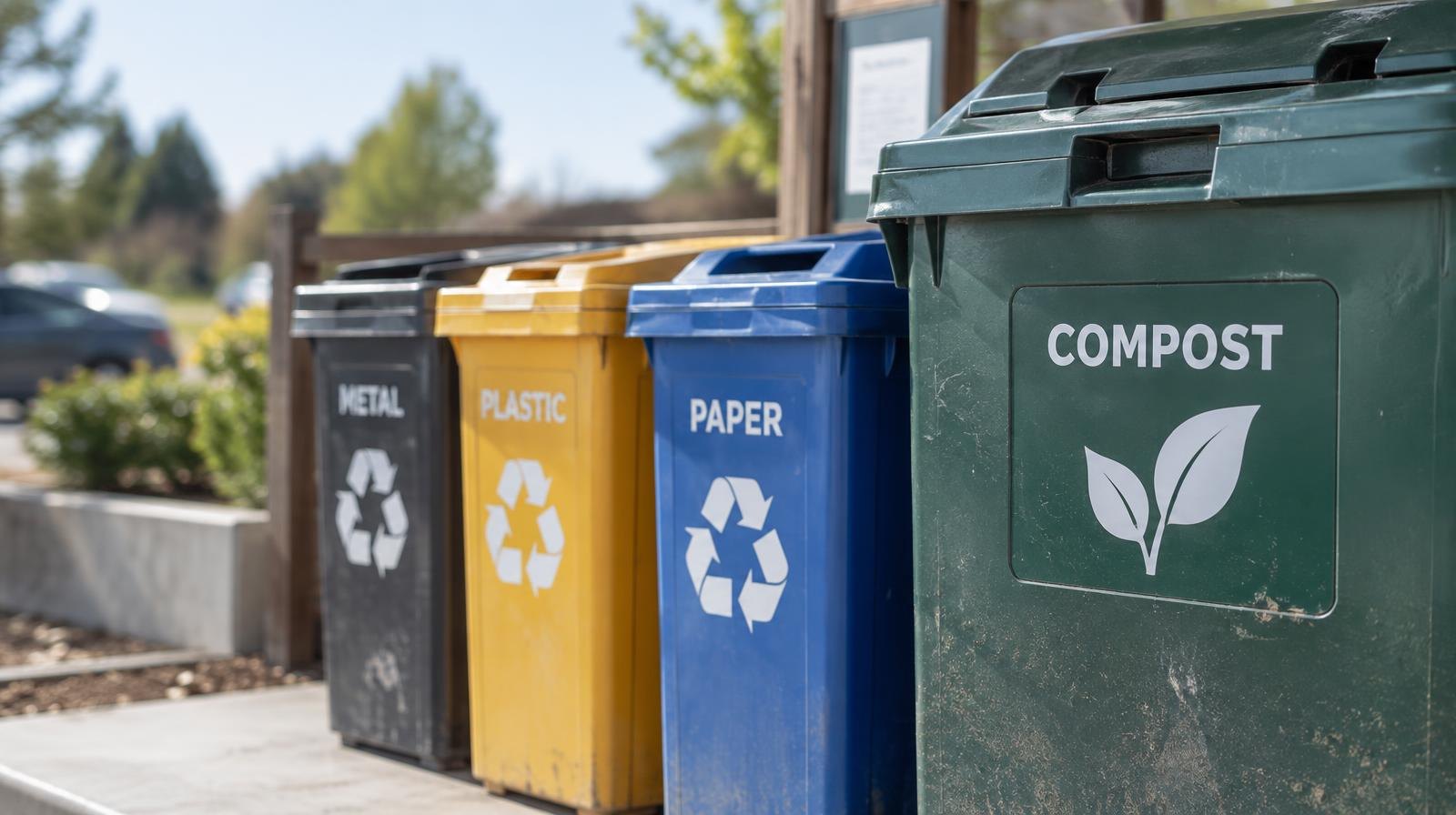
Four 24-hour recycling drop-off sites opened by August at the Ledges Event Center, Kamas Park and Ride, Ecker Hill Park and Ride and Three Mile Canyon Landfill. Each accepts residential glass and mixed recyclables, with cardboard bins expected in fall 2026.
Solid Waste Superintendent Tim Loveday told the council during the Sept. 24 presentation that the Ecker Hill site is already seeing heavy use, with recycling containers emptied three times a week. The county is preparing additional cardboard containers and exploring another drop-off location in Henefer. Two more recycling sites are planned for Park City and the Silver Summit-Silver Creek area in 2027.
Composting gap
Food waste is the plan's largest diversion target at 39% of the waste stream. After composting operations in Browns Canyon were disrupted, local processing capacity was lost. Some collected food waste is now being trucked outside Summit County.
The county is working with the Park City Community Foundation on a feasibility study to determine whether to build a local composting or organics processing facility. That study is expected to continue into 2027.
On the same day the council adopted the waste plan, it voted 4-0 to uphold the revocation of Spoil to Soil's conditional use permits for its Browns Canyon composting facility, according to KPCW. Spoil to Soil has filed a lawsuit claiming it was unfairly targeted by code enforcement. That case remains pending.
New rules under consideration
The plan proposes exploring waste-diversion requirements for commercial businesses, special events and short-term rentals. Those measures would need additional evaluation and a separate council vote before taking effect.
On the operations side, Loveday said replacing the traditional six-inch soil cover used at the landfill with a thinner alternative material could preserve 10% to 15% of landfill space. The county is also evaluating a new compactor to fit more waste into the remaining footprint.
County staff will form an implementation working group to coordinate the plan's 13 strategies. Individual projects and funding requests will return through future budget cycles.